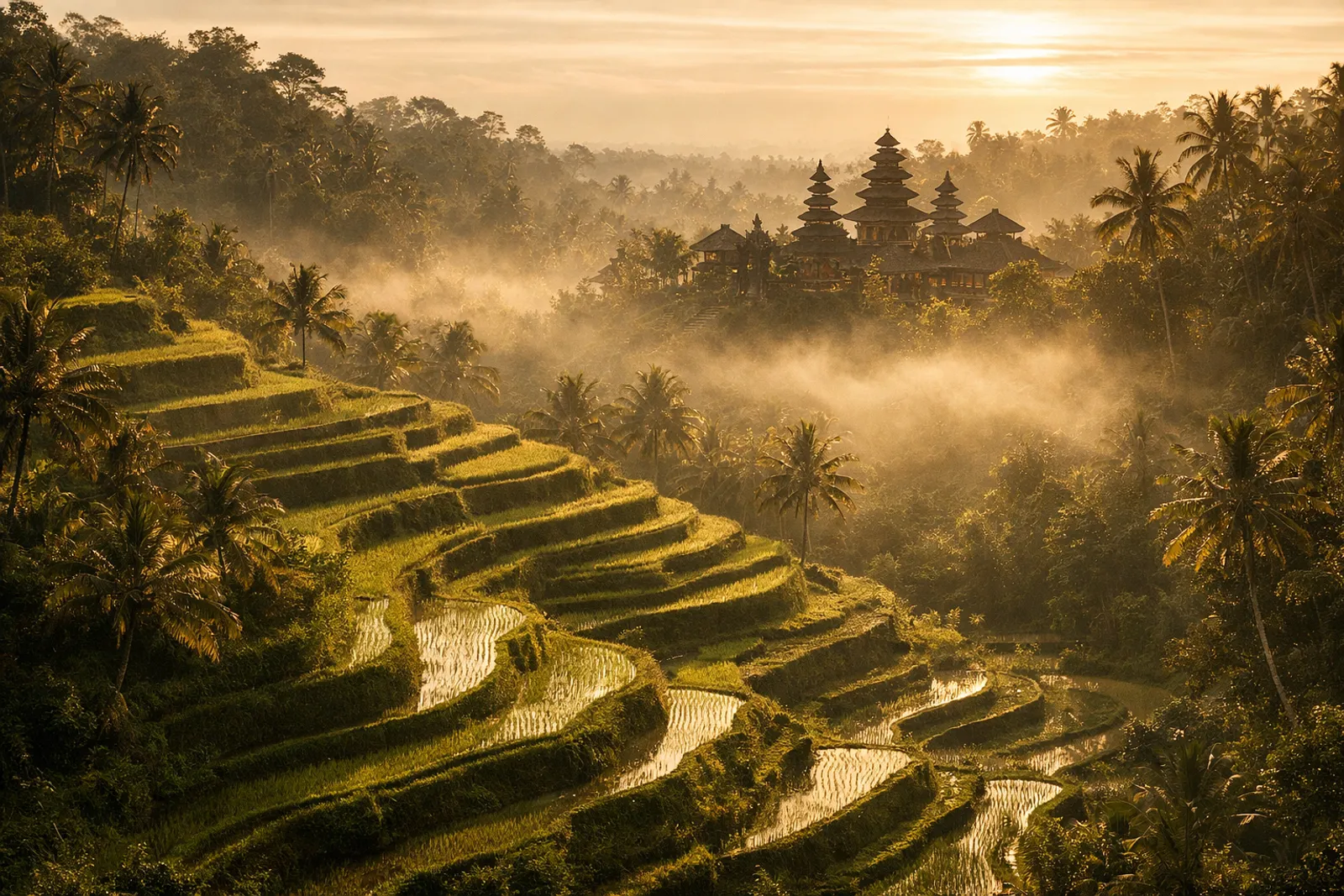
The rainy season in Bali, running roughly from November through March, is one of the most misunderstood aspects of travel to the island. Mention 'rainy season' and most people picture days of endless, dreary rain that make outdoor activities impossible. The reality could not be more different. Bali's wet season delivers warm, sunny mornings, dramatic afternoon thunderstorms that are thrilling to watch from the comfort of your villa, and landscapes so green and lush that they make dry-season Bali look almost parched by comparison. For travellers who understand the pattern, the rainy season can be the most rewarding time to visit.
Bali Malayali is a strong advocate for wet-season travel, and the reasons are compelling. Accommodation prices drop 30-50% across the island. Tourist crowds thin dramatically — sometimes you'll be the only visitors at famous temples and attractions. The rice terraces reach their most photogenic state, waterfalls thunder at their most impressive, and the whole island vibrates with the intense green energy of tropical monsoon growth. The Balinese themselves find this season spiritually significant, with many important ceremonies falling during this period.
The key to enjoying Bali's wet season is understanding and working with the weather rhythm rather than fighting against it. The rain follows a remarkably consistent pattern: clear mornings, building clouds after noon, afternoon or evening downpours lasting 1-3 hours, then often clearing by nightfall. Bali Malayali designs wet-season itineraries that front-load outdoor activities into the morning hours and schedule indoor experiences — cooking classes, spa treatments, museum visits, shopping — for the afternoon. The result is a trip that feels full, varied, and barely affected by the rain.